Waste Recycling in London: Local, Practical Solutions for Homes and Businesses
Waste recycling in London is more than a routine collection task. For many households, landlords, offices, shops, restaurants, and construction teams, it is a practical way to keep properties clear, meet local responsibilities, and reduce the amount of material sent to landfill. In a city as busy and varied as London, recycling needs to work around narrow streets, limited loading space, permit restrictions, shared courtyards, busy commercial roads, and the everyday pressure of keeping a property operating smoothly.
If you are looking for a reliable way to handle recyclable materials, mixed waste, or bulky unwanted items, a local service can make the process easier. The right team understands borough-by-borough collection challenges, access issues in terraced streets and apartment blocks, and the timing needs of businesses that cannot afford disruption. Whether you are clearing a flat in Islington, emptying office space in the City, managing a retail unit in Westminster, or dealing with post-refurbishment waste in Southwark, waste recycling in London should feel organised, compliant, and straightforward.
This page is designed for customers who want a dependable local solution. It explains what a recycling service can include, how the process works, which factors affect pricing, what to prepare in advance, and why a London-based team is often the most practical choice. If you are ready to request a free quote or book your service now, the information below should help you decide with confidence.
What Waste Recycling in London Means for Local Customers

In everyday terms, waste recycling in London means separating recoverable material from general rubbish and arranging for it to be handled responsibly. That can include cardboard, paper, plastics, metal, green waste, timber, packaging, furniture, and selected commercial materials. For many local customers, the most important part is not just removal, but knowing that the job is being handled with care and with attention to what can be reused, recycled, or diverted from disposal.
London properties create a wide range of waste streams. A family in a Victorian terrace may need help with accumulated household clutter. A property manager overseeing a block in Clapham may need a recurring solution for bin store overflow. A café in Shoreditch may produce large volumes of packaging and food-related waste. A builder working near Hackney Wick may need a practical way to clear mixed materials after a renovation. Local recycling services are useful because they can adapt to these different realities rather than treating every job the same.
It also matters that London has many different types of access conditions. Some streets allow only short stopping windows. Some flats have no lift access or shared entrances. Some commercial premises need collection outside trading hours. A local recycling team can plan around those issues and arrive ready for the space, the load type, and the time constraints involved.
Why local knowledge matters
Working in London is not the same as working in a smaller town. The density of housing, the diversity of businesses, and the variation between borough regulations mean that experience counts. A local team is more likely to understand how to manage narrow mews streets, controlled parking areas, basement access, estate roads, and mixed-use developments where residents and commercial occupiers share the same service areas. That practical knowledge saves time and reduces disruption.
Services Typically Included

Every customer has different needs, but a well-organised recycling service usually begins with a clear understanding of what needs removing and how much space is involved. It may include sorting recyclable items, loading materials safely, separating reusable items where appropriate, and ensuring that non-recyclable waste is managed correctly. For many customers, the service also includes lifting from inside the property, basement, rear garden, shop floor, office suite, or communal area, depending on access.
In London, customers often use recycling support for one-off clearances or recurring waste management. One-off jobs might include moving old office furniture, clearing cardboard from a retail stockroom, or removing bags of mixed household items after a move. Recurring jobs may suit restaurants, bars, salons, small warehouses, and facilities teams that want a dependable arrangement for recyclable materials and general waste overflow.
Some of the most common materials handled through waste recycling in London include:
- Cardboard and packaging from retail, warehousing, and office settings
- Paper, files, and documents that need secure handling before disposal
- Metal items such as shelving, fixtures, and certain equipment
- Timber, pallet material, and light construction offcuts
- Garden waste from residential properties and managed outdoor spaces
- Furniture such as desks, chairs, cabinets, and tables
- General mixed waste where recycling and disposal need to be sorted carefully
How the Service Works
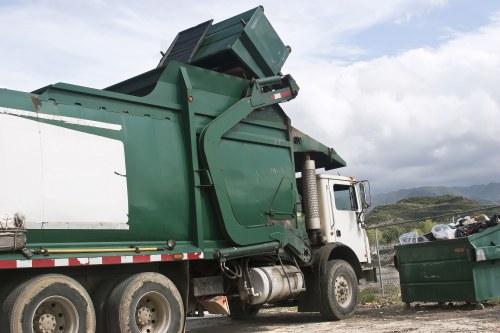
Most customers want a simple process, especially when juggling work, family life, or a commercial schedule. A good local service is designed to be straightforward from the first enquiry to final collection. Usually, the process starts with a description of the materials, the property type, and the location in London. Photos can be helpful if available, particularly for larger or mixed loads, but they are not always essential. The aim is to understand the job clearly so the right vehicle, staffing level, and time allocation can be arranged.
Once the details are reviewed, the service can be planned around access conditions and timing. For residential customers, that may mean a collection slot that works around school runs, work commitments, or building management rules. For business customers, it may mean arranging a collection before opening hours, after closing, or during a quieter period to avoid disruption. If parking is tight or loading must be completed quickly, the team can plan accordingly.
On the day, the team arrives, assesses the load, confirms the agreed scope, and begins removal. Good communication is important throughout. If there are extra items or access complications, these can be discussed before work continues. Once the waste is loaded, it is taken for sorting, recycling, and responsible disposal. For local customers, that means less time worrying about logistics and more time getting the property back to normal.
A practical approach for busy London properties
Time matters in London, whether you are trying to clear a flat before a move, restore a shop floor after a stock refresh, or keep a worksite tidy during a refurbishment. A professional recycling service should be responsive, well organised, and aware of local restrictions that affect timing and access.
Residential Waste Recycling Across London
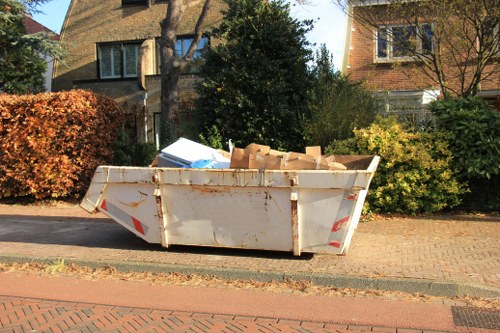
Households across London use recycling services for many reasons. Some are clearing years of accumulated household items in a family home. Others are managing the contents of a rental property between tenancies. Many people simply reach a point where old furniture, broken appliances, packaging, and general clutter become too much to handle on their own. In apartments and maisonettes, the challenge is often less about volume and more about access, stairs, shared entrances, and the need to be considerate of neighbours.
London homes come in many forms: converted flats in Brixton, terraces in Walthamstow, mansion blocks in Kensington, new-build apartments in Canary Wharf, and suburban houses in Wimbledon, Ealing, or Enfield. Each has different practical issues. A flat above a shop may have no lift. A basement in Notting Hill may require careful carrying. A shared estate in Lewisham may involve restricted vehicle access. Local recycling support is valuable because it can be adapted to these settings without putting the customer under pressure.
Residential customers often ask for help with items such as unwanted furniture, old toys, broken storage units, mixed bags of household waste, garden cuttings, and packaging left after deliveries or home improvements. Some also need support after probate, downsizing, or moving into a smaller space. In those situations, a calm and respectful approach matters. The aim is to reduce stress while making sure recyclable material is separated whenever possible.
Common household situations
Typical residential reasons for booking waste recycling in London include:
- Clearing before or after a house move
- Emptying a loft, garage, shed, or storage room
- Dealing with bulky items that will not fit in standard bins
- Preparing a rental property for new occupants
- Removing packaging after furniture deliveries or renovations
- Handling general clutter in homes that need a fresh start
Commercial and Trade Recycling Services
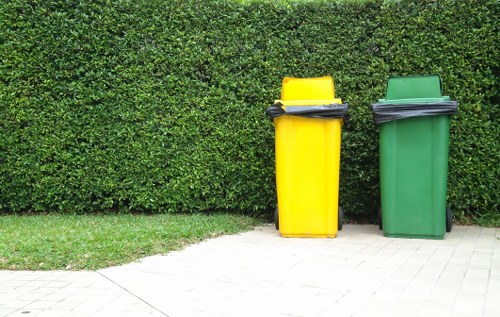
London businesses need waste solutions that are reliable, discreet, and suited to the pace of the workplace. Commercial recycling often includes cardboard, office paper, shop fixtures, packaging, and other recoverable materials that build up quickly in busy environments. For office-based businesses, recycling can be part of an ongoing housekeeping routine. For shops and hospitality venues, it may be tied to deliveries, fit-outs, refurbishments, or stock changes. For trade customers, it often involves a combination of recyclable material and mixed site waste.
Many commercial customers operate in locations where access is tight and timing is critical. Offices in the West End may need collections outside peak business hours. Retail units in Covent Garden or Camden may have limited delivery bays. Restaurants in Soho, Marylebone, or Canary Wharf may need a service that is quick, tidy, and respectful of surrounding businesses. A local team understands that commercial recycling is not just about lifting items; it is about keeping operations smooth.
Trade and construction-related recycling can also include timber offcuts, plasterboard in appropriate situations, packaging, metals, and other materials that arise during strip-outs or refurbishments. While regulations and site requirements vary, the need for an organised and responsive service is common. A practical provider helps keep the site clear, supports safer working conditions, and reduces the risk of materials piling up.
Useful for many business types
Commercial waste recycling in London is often used by:
- Offices and co-working spaces
- Retail stores and pop-up units
- Restaurants, cafés, and takeaways
- Gyms, salons, and health clinics
- Warehouses and storage facilities
- Building contractors and refurbishment teams
Why Choose a Local London Company
There are clear benefits to using a company that works locally across London rather than a distant provider unfamiliar with the city’s layout. First, the team is more likely to understand borough-level access issues, parking realities, and the practical demands of collections in busy districts. That matters when every minute counts, particularly in central areas where stopping space is limited or where buildings have strict access controls.
Second, a local company is usually better placed to respond flexibly. London customers often need short-notice collections, collections outside normal hours, or arrangements that fit around service lifts, concierge rules, or site management procedures. A provider used to London conditions can plan around these needs more efficiently and with less back-and-forth.
Third, local knowledge supports better customer service. A team that regularly works in boroughs such as Camden, Tower Hamlets, Hammersmith and Fulham, Greenwich, Hackney, Lambeth, and Barnet is more likely to anticipate common issues before they become delays. That can make a real difference when you are trying to keep a property or business moving.
Benefits customers usually value most
- Better understanding of local access and parking challenges
- Faster planning for collections across different London areas
- Practical help with flats, terraces, offices, shops, and mixed-use buildings
- Clearer communication about timing and load type
- A more convenient service for urgent or time-sensitive jobs
Areas Covered Across London
Waste recycling in London is often needed across a wide mix of neighbourhoods, from central commercial districts to residential suburbs. While exact coverage can vary by provider and job type, local customers commonly request services in areas such as Central London, North London, South London, East London, and West London. The nature of the service may differ depending on the area, but the need for reliable collection stays the same.
Customers in places like Westminster, Soho, Paddington, and Victoria may need quick access and careful timing around traffic and loading restrictions. In districts such as Hackney, Stratford, Bow, and Shoreditch, mixed-use streets and converted buildings may require extra planning for carrying and parking. Residential areas such as Richmond, Wimbledon, Dulwich, Barnet, and Ealing often need help with household clearances, garden waste, or bulky items from larger properties. Commercial and industrial locations near Brentford, Park Royal, Acton, and Silvertown may require more frequent recycling support.
Because London is so varied, the best service is one that can adapt. Whether your property is a studio flat, a large family house, a shared estate, a hospitality venue, or a workspace, the collection should be planned around the realities of your location rather than forcing the job into a one-size-fits-all approach.
What to Prepare Before Collection
A little preparation can make the recycling process faster and smoother. You do not need to do everything yourself, but it helps to identify what should go, what should stay, and which areas of the property the team will need to access. For busy London customers, this can reduce delays and help avoid confusion on the day.
If you are sorting materials in advance, try to separate clearly recyclable items from general rubbish where possible. Keep hazardous items, confidential documents, and specialist materials aside unless they have been specifically discussed. If the collection point is inside a building, make sure doors, gates, or concierge instructions are ready. For businesses, it helps to tell staff when the team will arrive so hallways, entrances, or loading points can be kept clear.
Here is a helpful preparation checklist:
- Identify the items you want removed
- Check whether any items need special handling
- Clear access routes where possible
- Reserve parking or loading space if required and permitted
- Inform building management, concierge, or staff if needed
- Separate any documents or possessions you want to keep
- Make sure pets, children, or customers are away from the work area
Small steps that save time
Good preparation is not about doing the lifting yourself. It is about helping the collection go smoothly so the team can work efficiently and safely once they arrive.
Pricing Factors Customers Commonly Ask About
Many customers want to know what affects the cost of waste recycling in London before they book. While exact pricing depends on the job, several common factors usually shape the quote. The type of material is important because different waste streams require different handling. The total volume matters because more items may need a larger vehicle or more labour time. Access is another key factor, especially in London where walking distance, stairs, lifts, parking, and carrying time can all influence the work involved.
Timing can also make a difference. Same-day or urgent collections may require more flexible scheduling, while pre-booked jobs can often be planned more efficiently. If the waste is spread across several rooms, floors, or buildings, that can affect the time needed. Commercial jobs may involve loading around opening hours or coordinating with site managers, which should also be considered during quoting.
To keep things clear, it helps to provide as much detail as possible at the enquiry stage. That might include the property type, the approximate amount of waste, whether access is from the front or rear, and any building restrictions. A transparent quote should reflect the actual work involved rather than relying on guesswork.
Factors that may affect a quote
- Volume and weight of the material
- Number of items and whether they are bulky
- Ease of access, stairs, lifts, and carrying distance
- Parking or loading limitations
- Time of day or urgency of the collection
- Whether the load is mixed, recyclable, or requires special handling
What Makes a Service Trustworthy
Trust matters when you are handing over items from your home, office, or worksite. Customers usually look for a service that is clear about what it can take, careful about the property, and respectful of the time agreed. In a city like London, professionalism shows up in small but important ways: arriving prepared, communicating before the job, working tidily, and knowing how to handle access challenges without creating extra stress.
A trustworthy service should also be realistic about what can be recycled and what needs another route of disposal. Not every material belongs in the same stream, and a good provider will not promise what cannot be delivered. Instead, the focus should be on sensible sorting, responsible handling, and a straightforward customer experience.
When choosing a provider, look for a team that explains the process clearly and answers practical questions in plain language. That is especially important for first-time customers, landlords managing multiple properties, and businesses with regular waste needs. The more confident you feel about the process, the easier it is to keep your home or workplace in good order.
Frequently Asked Questions
Can you handle both recycling and general rubbish?
Yes, many customers need a mixed solution. The team can usually separate recyclable material from general waste and manage each part appropriately.
Do I need to sort everything before collection?
Not always. Sorting can help, but it is often enough to identify the main groups and leave the rest to the team. If there are items that need special treatment, mention them in advance.
Can this service work for flats and upper-floor properties?
Yes. London has many apartments, maisonettes, and converted buildings. The key issue is access, and a local team can plan around stairs, lifts, shared entrances, and building rules.
Is waste recycling suitable for businesses with ongoing needs?
Absolutely. Offices, retailers, hospitality venues, and trade sites often need regular or repeated collections, especially when waste builds up quickly.
What if I have limited parking or a tight loading area?
That is common in London. Let the provider know in advance so the collection can be planned around the available space and any restrictions.
Can you help with large clearances?
Yes, many recycling services handle everything from small domestic loads to larger clearances. The amount and type of waste will determine the best approach.
How do I know if my items can be recycled?
It depends on the material and condition. Cardboard, paper, metal, and many clean packaging items are commonly recyclable, while some mixed or contaminated materials may need different handling. If you are unsure, ask before booking.
Book Waste Recycling in London With a Local Team
If you need waste recycling in London for your home, rental property, office, shop, or site, the easiest next step is to get in touch with a local team and explain what needs to be removed. A clear enquiry helps the provider understand the waste type, the access conditions, and the timeframe, so you can receive a practical quote and a suitable collection plan. Whether the job is urgent or scheduled in advance, the goal is to make the process efficient and convenient for you.
Local customers often choose this service because it saves time, reduces stress, and helps keep properties clean and usable. From everyday household clutter to commercial overflow and trade materials, the right recycling support can make a noticeable difference. If you are comparing options, focus on experience, clarity, flexibility, and the ability to handle London conditions with confidence.
Contact us today, request a free quote, or book your service now to arrange a collection that fits your property and your schedule. With the right local support, waste recycling becomes one less thing to worry about.